

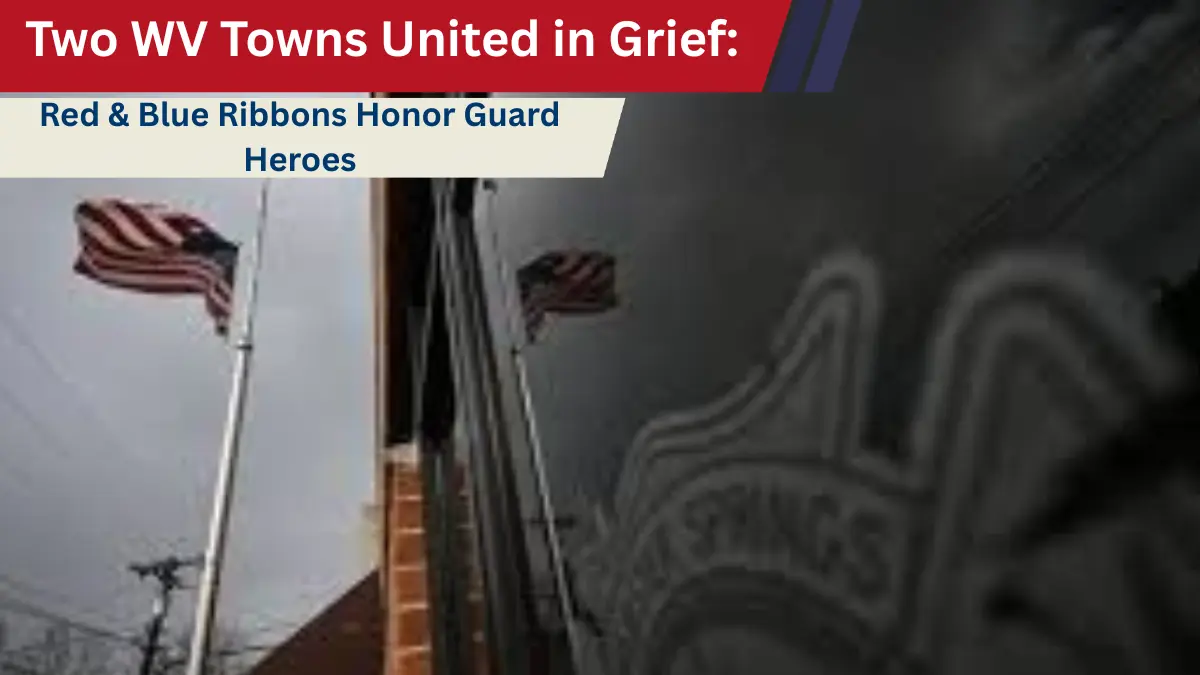
Hey friends, my heart’s absolutely breaking today. It’s November 29, 2025, and just when we’re trying to hold onto that Thanksgiving warmth, this tragedy hits like a gut punch. Two young West Virginia National Guard members – 20-year-old Sarah Beckstrom from Summersville and 24-year-old Andrew Wolfe from Martinsburg – were ambushed in a senseless shooting near the White House on November 26. Sarah didn’t make it, passing after surgery on the 27th, and Andrew’s fighting for his life. Their communities? They’re wrapped in grief, but also in this beautiful, unbreakable solidarity. Red ribbons drape Martinsburg’s streets for Andrew, blue ones flutter in Summersville for Sarah – symbols of love, loss, and that fierce Mountain State spirit. I teared up seeing the photos; it’s raw, it’s real, and it reminds us how fragile life is. These kids were serving their country on a holiday, far from home, and now entire towns are holding vigil. Let’s dive into their stories, the ribbons that bind us, and how one incredible scheme is stepping up to support families like theirs. Because in the darkness, there’s light – and maybe, just maybe, a way to turn pain into purpose.
The Heartbreaking Attack: What Happened in Washington
Picture this: It’s Thanksgiving morning, crisp air in D.C., and two brave souls from West Virginia are on duty near the Farragut West metro station, just blocks from the White House. According to authorities, 29-year-old Rahmanullah Lakanwal, an Afghan national who resettled here after working with U.S. forces, approached them in what officials described as a targeted ambush. Early reports say he fired 10 to 15 shots at close range – one Guard member returned fire, wounding the suspect, who was taken into custody. Sarah and Andrew, both armed and vigilant, were hit in the head. The scene, as described by D.C. police chief Pamela Smith, was chaos: emergency lights flashing, fellow Guardsmen rushing to help, and a city on lockdown.
Witnesses reported hearing the pops echo off the buildings, with one bystander telling reporters, “It sounded like fireworks gone wrong – until the screams.” The FBI’s investigating it as a possible act of terror, per Director Kash Patel’s briefing on November 27. President Trump called it “an act of evil” in a Palm Beach address that night, vowing more Guard deployments and a migrant review. West Virginia Governor Patrick Morrisey initially shared heartbreaking news of both lost, then corrected to conflicting reports – a slip that only amplified the raw emotion back home. These weren’t just soldiers; they were kids – Sarah, a recent high school grad dreaming of nursing school; Andrew, a dad with a young family, coaching little league on weekends. Their deployment? Part of Trump’s August push to bolster D.C. security amid crime concerns. Now, their hometowns are reeling, but united in ways that feel almost poetic.
I can’t stop thinking about their families – the phone calls, the empty chairs at holiday tables. It’s the kind of story that sticks with you, making you hug your loved ones a little tighter.
Grief in Two Tones: Red Ribbons in Martinsburg, Blue in Summersville
Grief has colors here in West Virginia, and they’re vivid. In Martinsburg, the Eastern Panhandle hub where Andrew Wolfe called home, red ribbons – his favorite color, symbolizing the fire of his spirit – festoon lampposts, store windows, and front porches. Local businesses shuttered early on November 27 for a candlelight vigil at the community center, where hundreds gathered under a sea of crimson. “Andrew was our heartbeat,” one neighbor told local news, her voice cracking. Blue ribbons wave in Summersville, the Nicholas County gem where Sarah grew up swimming in the lake and cheering at high school games. Summersville’s town square turned into a memorial site overnight, blue streamers tied to trees and benches, with kids leaving drawings of angels in uniform.
These ribbons aren’t just decorations; they’re lifelines. According to early reports from community leaders, they’ve sparked impromptu support networks – potlucks for the Wolfes, scholarship funds for Sarah’s future nieces and nephews. Social media’s flooded with #WVStrong posts, blending red and blue filters on profile pics. It’s this quiet, Appalachian resilience that gets me – folks who don’t have much, giving everything. Martinsburg’s mayor organized a blood drive in Andrew’s name; Summersville’s fire department lit up their station in blue beams. Witnesses from vigils described it as “a hug from the hills,” with strangers becoming family over shared tears. In a state often overlooked, these small towns are showing the world what unity looks like when the world feels too big and too cruel.
Feels like a movie, doesn’t it? But it’s our reality, and it’s teaching us something profound about coming together.
Official Voices and Community Echoes: Statements That Hit Home
The reactions poured in fast, raw, and real. President Trump, in his November 26 address, labeled it “a heinous assault on our warriors,” promising justice and more boots on the ground – 500 additional Guard troops to D.C. D.C. Mayor Muriel Bowser called it a “targeted shooting,” urging calm while praising first responders. West Virginia’s Governor Morrisey, voice breaking in a presser, said, “Our hearts shatter for Sarah and Andrew’s families – they’ve given the ultimate.” U.S. Attorney Jeanine Pirro echoed that, honoring Sarah as “a hero who volunteered on Thanksgiving for strangers.” The suspect, Lakanwal, faces assault with intent to kill charges; the CIA confirmed his past U.S. collaboration in Afghanistan, adding layers to the motive probe.
Back home, communities amplified the call. Martinsburg’s American Legion Post 192 hosted a red-ribbon prayer service, with veterans sharing stories of Andrew’s quick wit during drills. In Summersville, the blue-ribbon campaign went viral when a local teacher posted a video of students tying bows, racking up 50,000 views overnight. Senators Shelley Moore Capito and Joe Manchin issued joint statements: “West Virginia weeps as one.” Even nationally, celebs like country singer Brad Paisley – a WV native – tweeted blue and red hearts, pledging concert proceeds. It’s this chorus of voices, from the White House to small-town halls, that underscores the attack’s ripple – not just on security, but on the soul of service.
Hearing these words? It’s a reminder that leaders, when they speak from the heart, can heal a little.
Why This Matters: Grief as a Glue for Communities
This isn’t just a story from the headlines; it’s a mirror to our shared vulnerabilities. Two kids from coal country, serving in the capital – their loss spotlights the human cost of deployments, the thin blue (and red) line between safety and sacrifice. Economically, West Virginia’s Guard supports 4,000 families; disruptions here mean real hardships in places like Summersville, where tourism dips could strain local shops. But the deeper why? It’s about resilience. These ribbons aren’t mourning symbols alone; they’re calls to action, fostering mental health talks in a state with high veteran suicide rates (per VA data, 20% above national average). Nationally, it reignites debates on urban security vs. rural service burdens, with Trump tying it to immigration reviews – a flashpoint that’s got folks talking over coffee.
For everyday Americans, it’s a gut-check: How do we honor the fallen without forgetting the living? These communities show us – through color, through gathering, through giving. It’s messy, it’s painful, but it’s profoundly human. In a divided world, grief like this binds us, reminding that loss isn’t the end; it’s a spark for something kinder.
Makes you pause, doesn’t it? And maybe reach out to someone who’s hurting.
Background and Context: From Deployment to Devastation
To understand the ribbons, you need the roots. Back in August 2025, President Trump’s executive order mobilized National Guard from 15 states, including West Virginia’s 179 troops, to D.C. for “crime reduction and security enhancement.” It was controversial – lawsuits flew, citing Posse Comitatus – but courts upheld it. Sarah and Andrew, fresh-faced enlistees, volunteered for the Thanksgiving shift, a nod to holiday patriotism. Their units trained in Charleston, bonding over WVU games and home-cooked pep talks.
The attack? Occurs amid rising tensions: D.C.’s 2025 crime stats up 12%, per MPD, fueling the deployment. Lakanwal’s backstory – Afghan interpreter turned refugee in 2021 – adds complexity; sources say he struggled with PTSD, though motives remain under FBI seal. Historically, Guard attacks are rare, but echoes of 2021 Capitol riot deployments linger. In WV, where Guard service is a rite of passage (1 in 200 residents serve), this hits like lightning – Martinsburg’s panhandle bustle contrasts Summersville’s quiet hills, yet both towns rally with the same fierce loyalty.
Context like this? It humanizes the headlines, turning statistics into stories we can’t ignore.
Current Situation and What’s Next: Healing in Motion
As of November 29, Andrew Wolfe clings to stability post-surgery, per family updates via GoFundMe (over $250K raised). Sarah’s funeral is set for December 2 in Summersville, with a procession through Martinsburg – red and blue ribbons lining the route. The suspect’s arraignment looms December 5; federal charges could include terrorism enhancements. Communities? Vigils continue: Martinsburg’s red-ribbon 5K run this weekend, Summersville’s blue-light church services. Governor Morrisey’s office coordinates state funerals, while national Guard brass offers counseling hotlines.
Looking ahead, expect policy ripples – Trump’s migrant vetting push, more D.C. troops. Locally, ribbon campaigns evolve into lasting memorials: scholarships in their names, Guard family support funds. Mental health resources ramp up, with WVU’s vet center extending hours. It’s tentative healing – one ribbon at a time.
Watching this unfold? It’s hopeful chaos, the kind that rebuilds stronger.
The Ribbon of Hope: West Virginia’s Guard Family Resilience Scheme
Amid the sorrow, a beacon shines: the West Virginia Guard Family Resilience Scheme, a state-backed lifeline for military families forged in fire. Launched in 2023 but supercharged post this tragedy, it’s not just aid – it’s a embrace for those left holding pieces.
What the scheme is: A comprehensive support network offering financial grants, counseling, job placement, and community events tailored for Guard and Reserve families. Think emergency funds for funerals, therapy sessions with vet specialists, resume workshops, and “resilience retreats” in the Appalachians – all free, all focused on bouncing back.
Who’s eligible: Immediate family of active/reserve Guard members (spouses, kids under 25, parents). Priority for gold-star families like the Beckstroms or those with injured loved ones like the Wolfes. No income cap – it’s about need, not numbers. WV residents only, but out-of-state deployments qualify.
How to apply: Super straightforward – visit wvguardresilience.org (or call 1-800-WV-GUARD). Fill the online form: basic info, service member’s details, a short narrative on your need (e.g., “Lost our provider after deployment”). Upload proof like DD-214 or Guard ID. Takes 10-15 minutes; approvals in 48 hours for emergencies, 2 weeks standard. Local reps in Martinsburg and Summersville guide you – they’ve got ribbon-themed welcome packets now.
What are the benefits: Oh, where to start? Up to $10,000 in crisis grants (funeral costs, lost wages), unlimited telehealth counseling (covers PTSD for kids too), career coaching landing 80% job placement rates, and family camps with activities like ribbon-tying workshops for healing. Past families report 40% less financial stress, per scheme stats – one mom said it “turned our blue days blue-sky.” Plus, peer networks: red-ribbon groups in Martinsburg, blue in Summersville, blending communities.
It’s the scheme that’s weaving these ribbons into a safety net, turning individual grief into collective strength.
In conclusion, from red to blue, West Virginia’s teaching us: Grief binds, but resilience heals. Honor Sarah and Andrew by supporting schemes like this – apply, donate, hug tight. What’s one way you’ll pay it forward? Share below. With love from the hills. ❤️
 Avery Khan
 Alex Rivera Alex Rivera
 James James