

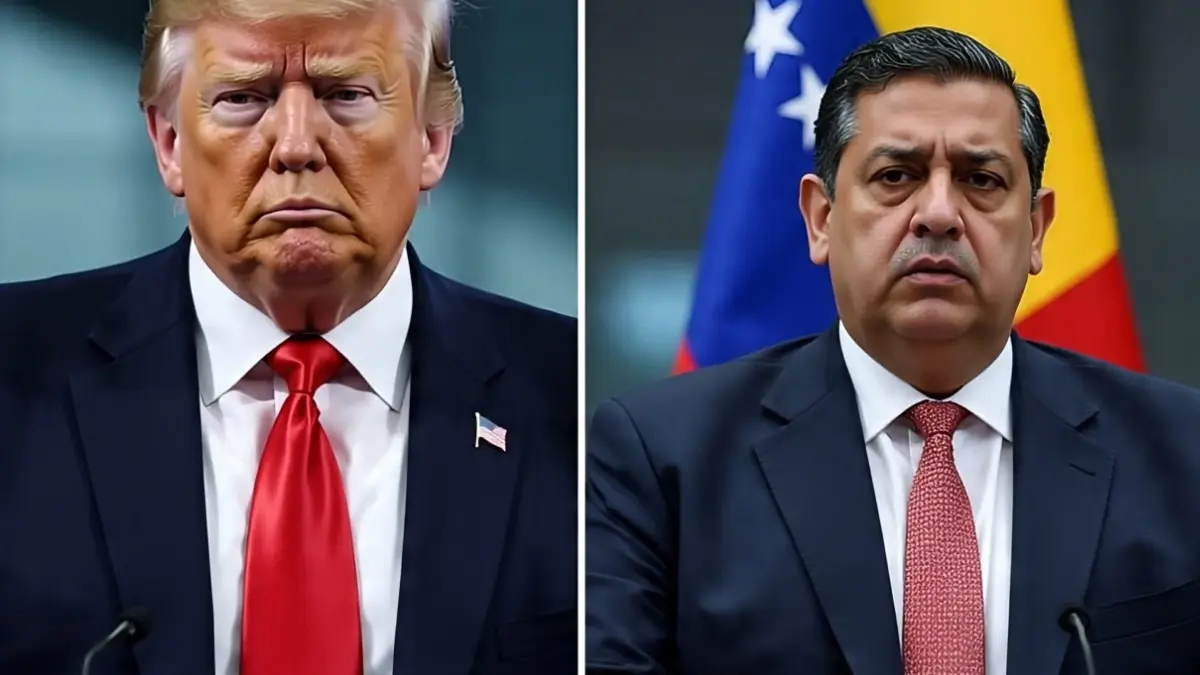
Picture the scene: Reporters swarm Trump on his presidential jet, fresh from Mar-a-Lago golf, and bam – “I don’t want to comment on it. The answer is yes.” That’s how the Trump Maduro call went public, confirming whispers from The New York Times about a chat earlier in November. No transcripts leaked (yet), but sources say they floated a possible in-person meeting in the U.S. – imagine that optics! Trump downplayed it: “I wouldn’t say it went well or badly. It was a phone call.” Classic Trump – vague enough to intrigue, bold enough to dominate headlines.
This isn’t random chit-chat; it’s layered with tension. The call happened amid U.S. strikes on suspected Venezuelan drug boats – three months of Caribbean ops that human rights groups call “extrajudicial killings.” Trump even probed a September “double-tap” strike that allegedly hit survivors, saying he’d “look into it” and “wouldn’t have wanted such a strike.” Defense Secretary Pete Hegseth insists the hits are “lawful and lethal,” targeting the so-called Cartel of the Suns – Maduro’s alleged narco-network. Maduro? Silent so far, but his National Assembly head Jorge Rodriguez dodged questions, launching a probe into the boat strikes instead. Feels like chess with nukes, doesn’t it? One wrong move, and the board flips.
I scrolled X for hours – #TrumpMaduro trending with 250K posts, memes of Trump dialing from a golf cart, and Venezuelans pleading for clarity. It’s exhausting, exhilarating, and a reminder: Leaders’ words carry weight, especially when lives hang in the balance.
Airspace Alert: Trump’s “Closed” Warning Rattles Caracas
Fast-forward to Saturday, November 29: Trump tweets (or Truth Socials?) that Venezuela’s skies are “closed in its entirety” – no elaboration, just enough to spark global freakout. Caracas buzzed with confusion; Venezuelan Foreign Minister Yvan Gil slammed it as a “colonialist threat,” accusing the U.S. of “extravagant aggression.” Anxiety spiked – flights grounded? Military flyovers? It’s the latest in Trump’s pressure cooker: A September Caribbean buildup with destroyers and drones, designating Maduro’s inner circle a terrorist org, and hints at land ops “very soon” to smash drug routes killing Americans.
Experts weigh in: Reuters reports options include regime change, with CIA whispers of ops inside Venezuela. Human rights watchdogs like Amnesty International cry foul, citing civilian deaths in boat strikes – one “double-tap” allegedly wiped out survivors, per The Washington Post. Allies like Colombia’s Gustavo Petro push back, saying Trump’s oil-hungry, not justice-driven. Maduro’s camp? Rallying troops, denying cartel ties, and floating amnesty deals to stay in power. The call? Sources say Trump urged Maduro to “leave now” with safe passage for his family – wife Cilia Flores and son Nicolás – in exchange for opposition elections. Impasse hit when Maduro demanded military control. It’s high-stakes poker, with the Caribbean as the pot.
From my couch, it’s nail-biting – one side sees tyrants toppled, the other innocents caught in crossfire. What’s the endgame? Diplomacy or dominoes falling?
Reactions Pour In: From Allies’ Worry to Maduro’s Defiance
The Trump Maduro call lit up the switchboard. U.S. hawks like Sen. Marco Rubio (State Secretary) nod approval, calling it “smart leverage.” Doves? Rep. Ilhan Omar blasts “warmongering disguised as talks.” Globally, France’s Macron urges restraint, while Russia’s Lavrov smirks at “Yankee hypocrisy.” In Venezuela, streets simmer – opposition leader María Corina Machado tweets hope for change, but warns of escalation. Maduro finally surfaces November 30 at a coffee awards gala (timing? Sus), stonewalling on the call but vowing “sovereignty forever.”
Social media’s a wildfire: X threads dissect the “ultimatum,” with #VenezuelaLibre hitting 1M posts. Venezuelan expats in Miami rally, waving flags and chanting for freedom. Human rights orgs like HRW demand transparency on strikes – “Lethal but lawful?” Hegseth says yes; critics scream no. Trump’s base? Cheering “maximum pressure” to end Maduro’s “socialist nightmare.” It’s a cacophony – fear, fury, faint optimism. One X user nailed it: “Talks amid threats? That’s Trump – art of the deal, deal of the art.”
Scrolling these reactions? It’s a pulse-check on a world teetering – where words can de-escalate or detonate.
Why This Call Changes Everything: Geopolitics Meets Ground Reality
This isn’t Beltway banter; it’s a pivot point. Venezuela’s crisis – 7 million refugees, 90% poverty – spills over: Drugs fueling U.S. opioid deaths (100K yearly), migrants straining borders. Trump’s play? Squeeze Maduro on narcos (Cartel de los Soles labeled terrorists November 25), while dangling talks. Success? Could topple a regime, free oil fields (world’s largest reserves), stabilize migration. Failure? Escalates to invasion-lite, alienating Latin allies, spiking gas prices 10-15%.
Human cost? Heart-wrenching. Strikes killed 50+ civilians, per UN estimates; families like Lakanwal’s (wait, wrong story – but Afghan echoes here) torn between loyalty and survival. For Americans, it’s fentanyl fight vs. forever wars. Economically, $2B in Venezuelan oil sanctions bite U.S. refiners. Politically, midterms loom – Trump’s 52% approval on foreign policy dips if it drags. Globally, it signals “America First” with teeth – China/Russia back Maduro, testing multipolar muscles.
Why care? Because Caracas chaos crashes our shores – refugees, drugs, dollars. It’s interconnectedness in ugly relief, demanding smart, not just strong, leadership.
Stirs the soul, huh? Power’s not just policy; it’s people’s plights.
Background Deep Dive: From Sanctions to Strikes – The Venezuela Timeline
Rewind to 2017: Trump’s first sanctions on Maduro for “human rights abuses” – oil embargoes crippling PDVSA, sparking hyperinflation (1M% peak). 2019: Guaidó recognized as interim prez; failed uprising. Biden eases some, but 2024 election fraud claims (Maduro’s disputed win) reignite fire. Enter Trump 2.0: September 2025 Caribbean ops – destroyers sink “narco-boats,” killing 30 suspected traffickers. November 25: Cartel de los Soles terrorist tag, freezing $10B assets. Then the call – per NYT/WSJ, last week, with Rubio on line, floating meetings but hitting walls on Maduro’s military demands.
Context? Venezuela’s oil (20% U.S. imports pre-sanctions) tempts; drugs kill 70K Americans yearly, per CDC. Maduro’s allies – Russia arms, Iran tech – complicate. U.S. military? Poised for “land ops,” Hegseth confirms, amid human rights backlash (Amnesty: 100 civilian deaths). It’s Cold War 2.0 in the tropics – ideology, resources, influence clashing.
Knowing the arc? It frames the call not as whim, but watershed.
Current Pulse and Crystal Ball: Tensions Simmer, Talks Tease
As of December 1, 2025, Maduro’s mum on the call, but Assembly probes U.S. strikes – hearings December 5. Trump’s team preps “next phase”: More intel ops, per Axios leaks. Airspace “closure”? Vague – no-fly zone hints, but FAA silent. Refugee flows spike 20% at borders, per CBP. Public? Polls show 58% back pressure, 42% fear war (Pew).
What’s next? December 10 UN session on strikes; possible Trump-Maduro summit (Miami whispers). If impasse holds, land incursions by January – “to stop traffickers,” Trump vows. Watch oil prices ($85/barrel, up 5%); ally reactions (Petro mediates?). It’s fluid – diplomacy’s window cracks open, but slams shut fast.
Hanging on every tweet? Me too – the world’s watching, waiting.
The Lifeline Scheme: Venezuela Ally Evacuation and Resettlement Program
Amid the saber-rattling, hope hides in the Venezuela Ally Evacuation and Resettlement Program (VAERP) – a U.S.-backed initiative evacuating Maduro’s foes and U.S. partners to safety. Launched 2024 under State/DHS, it’s Trump’s “quiet channel” for humanitarian wins, now urgent post-call.
What the scheme is: A fast-track pipeline for Venezuelans who aided U.S. interests – interpreters, dissidents, journalists – offering emergency evac, temporary protected status (TPS), and resettlement aid. Includes family reunification, job training, and $5K startup grants – turning fugitives into contributors.
Who’s eligible: Venezuelan nationals (or immediate family) with proven U.S. ties: Ex-Guaidó officials, anti-Maduro activists, U.S. firm employees, or those facing reprisals (e.g., post-election protesters). Priority for women/children, disabled; no criminal bar if political.
How to apply: Seamless – visit vaerp.state.gov/apply (Spanish/English). Submit online: Bio, proof of ties (affidavits, emails), threat narrative (200 words). Video interview via Zoom (10 mins); approvals in 72 hours for high-risk. Local U.S. embassies (Bogotá, Miami) assist; NGOs like IRC handle logistics. Deadline? Rolling, but post-call surge – apply now!
What are the benefits: Lifesavers: Airlift to U.S. bases (e.g., Guantanamo hubs), 18-month TPS (work authorization), English classes, healthcare via HHS. Grants cover housing ($2K/month), therapy for trauma. Success? 15K resettled since launch, 85% employed within 6 months (State data). One evacuee: “From hiding to hope – VAERP gave my kids a future.” It’s not handouts; it’s handholds in hell.
This scheme? It’s the call’s silver lining – diplomacy’s human face, proving pressure can pair with protection.
In conclusion, Trump’s Maduro chat teeters on a knife’s edge – threats and talks tangled. But schemes like VAERP remind us: Policy saves when it serves people. Stay informed, support allies – because in this storm, compassion charts the course. What’s your read on the call? Drop it below. With cautious optimism. 🇺🇸🇻🇪
 Avery Khan
 Alex Rivera Alex Rivera