

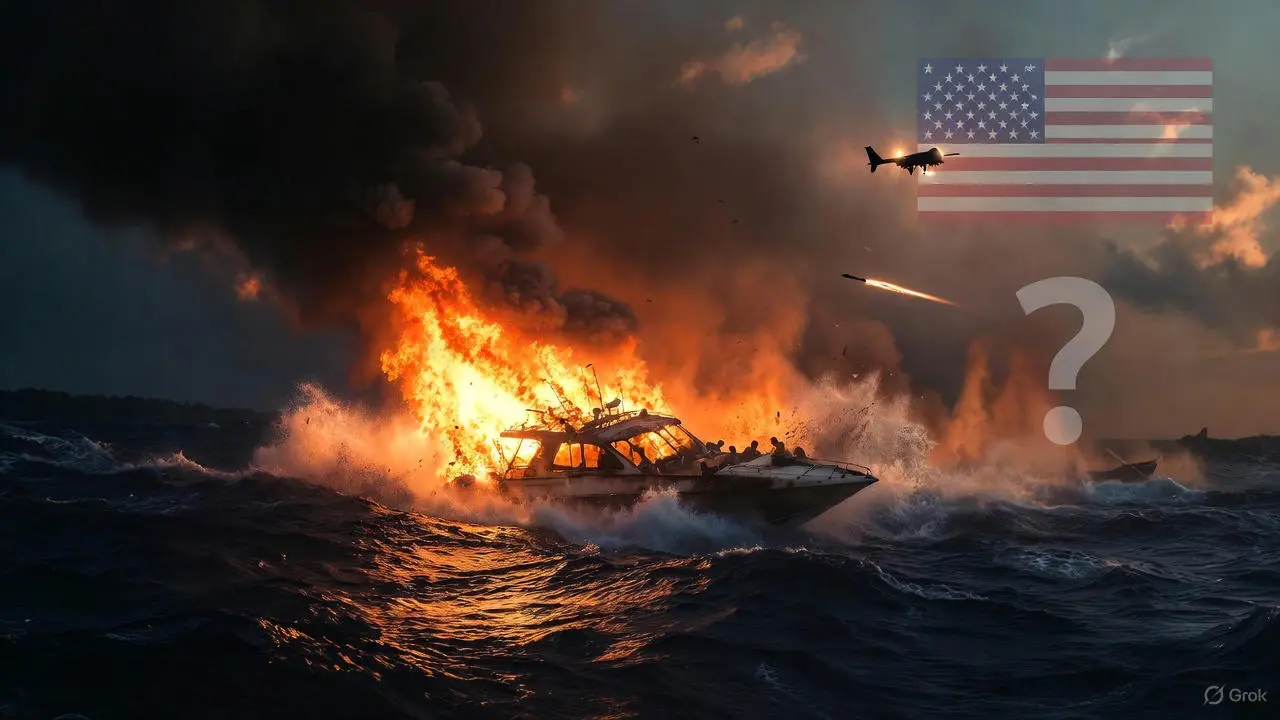
The grainy drone footage plays on loop in congressional hearing rooms: A speedboat erupts in flames off Venezuela’s coast, survivors cling to wreckage, then a second missile silences them forever. It’s the Sept. 2 strike that’s got lawmakers in a lather – but as fists pound tables over those two deaths, a sharper question fades into the spray: Are President Trump’s boat attacks, now tallying 87 lives, even legal? In this escalating Caribbean campaign, one follow-up blast risks eclipsing a policy that treats fishermen like foes and drug rumors like declarations of war.
What’s Driving the Second Strike Scrutiny Obscures Larger Question About Trump’s Boat Attacks?
At its heart, the second strike scrutiny obscures larger question about Trump’s boat attacks boils down to a deadly double-tap in international waters. On Sept. 2, U.S. forces – likely an MQ-9 Reaper drone – hammered a Venezuelan speedboat suspected of hauling cocaine. The first hit killed nine of 11 aboard, leaving two bobbing amid debris. Minutes later, a follow-up strike finished the job, per a Washington Post exposé that lit Capitol Hill ablaze.
This wasn’t a one-off. It’s the opener in Trump’s “narcoterrorist” blitz: 23 strikes across the Caribbean and eastern Pacific since September, claiming 87 lives with zero arrests or seizures. The administration frames it as wartime targeting – drug cartels as enemy combatants under a shadowy “non-international armed conflict.” But critics, from Geneva Convention buffs to bipartisan senators, call it vigilante overkill, blurring law enforcement with lethal force.
The furor? A classified briefing this week showed lawmakers video of the survivors “trying to right the boat,” per Sen. Tom Cotton (R-Ark.). Dems cry war crime; GOP defends it as threat neutralization. Yet, as The New York Times notes, this pixel-peeping dodges the core: Were any of these boats fair game?
Who’s Caught in the Wake of Trump’s Boat Attacks?
Nobody’s untouched when missiles rewrite the rules of the sea. Venezuelan fishermen and small-time smugglers bear the brunt – poor folks on go-fast boats, often without flags or fight, now presumed “narcoterrorists” on sight. Families in coastal towns like Puerto La Cruz mourn sons labeled threats, their pleas drowned by White House spin.
U.S. service members? Drone pilots and admirals like Frank M. “Mitch” Bradley face moral whiplash – orders to kill sans evidence, per CBS reports. Lawmakers from both aisles, like Sen. Thom Tillis (R-N.C.), who blasted the strikes as unethical, are eligible for briefings but starved of docs.
Broader ripples hit American overdose victims’ kin – the policy’s supposed beneficiaries – and taxpayers footing drone ops bills. Caribbean nations like Trinidad and Tobago? They’re fishing charred hulls from their shores, torn between U.S. aid and sovereignty screams. As we unpacked in our deep dive on U.S. shadow wars, these ops ensnare allies in the fallout, from refugee spikes to Maduro’s propaganda wins.
How the Strikes Unfold: A Look at the Machinery Behind the Missiles
Accessing the full picture? Tough – it’s classified fog. But piecing leaks: Strikes launch from U.S. Southern Command assets, drones circling from bases in Florida or Colombia. Targets flagged via intel – often unverified tips from DEA or allies – as “high-value” cartel vessels.
To “join” the fray? Not for civilians; this is Pentagon playbook. But transparency? Lawmakers push for video dumps, with Trump teasing a full Sept. 2 release on Truth Social. Publicly, track via Defense Department briefings or FOIA requests to unpack the Office of Legal Counsel memo greenlighting “boat-only” hits that conveniently sink crews too.
For analysts, tools like Flightradar24 shadow drone paths; whistleblowers leak to outlets like The Guardian. Want in on oversight? Contact your reps – Senate Armed Services is fielding tips, as flagged in our guide to congressional war powers.
Hits and Misses: Benefits, Risks, and Fresh Waves of Controversy
Proponents tout quick wins: Strikes deter smugglers, echoing Obama’s “double-tap” drone tactics that curbed terror. No U.S. boots lost, and Trump claims it slashes fentanyl flows – though experts like those at Al Jazeera debunk that, noting boats haul coke, not China’s precursor chems fueling 70% of ODs.
Benefits? Streamlined ops save on interdictions (past seizures cost millions per bust), and politically, it rallies the base – polls show 55% back “tough” anti-drug hits when framed vaguely. Risks scream louder: War crime tags under Geneva – targeting wounded voids protections. No evidence? Strikes hit innocents, per Colombian Prez Petro’s “murder” charge. Escalation? Venezuela masses navy, risking hot war over oil-rich Orinoco.
Latest splash: Thursday’s hearings grilled Adm. Bradley, who denied a “kill ’em all” order from SecDef Pete Hegseth, claiming the second strike “sank the threat.” But Dems like Sen. Jack Reed called it “disturbing,” demanding full footage. Friday, another strike off Ecuador killed four – toll hits 91. X erupts: @atrupar clips Cotton fumbling on radio evidence, racking 700 likes. Hegseth’s turtle-meme taunt? Crass deflection, per viral backlash.
From the Beat: Why This Feels Like a Slippery Slope to Somewhere Dark
I’ve chased drone shadows from Yemen to Yemen – wait, Yemen twice – and this boat barrage reeks of mission creep. Trump’s “armed conflict” fiat? It’s a lawyerly dodge, per ex-Army JAG Geoffrey Corn: “Unarmed speedboats aren’t warships; crews aren’t soldiers.” The fentanyl fib? Overdoses are Mexican labs, not Venezuelan hulls – it’s red meat for rallies, not reality.
Hegseth’s Fox-to-Pentagon jump screams politicization; his “I watched it live” flip to “I stepped out” erodes trust. Bipartisan probes are good, but narrow – fix the second strike, ignore the 85 others? That’s selective blindness. As in our take on drone ethics, unchecked “kinetic” ops normalize extrajudicial kills, from boats to borders. Trump’s endgame? Oil grabs in Venezuela, per X whispers tying strikes to Exxon deals. If we don’t zoom out, the larger question drowns.
Closing the Loop: Time to Chart a Safer Course
The second strike scrutiny obscures larger question about Trump’s boat attacks, but sunlight’s piercing the fog – videos, votes, voices. Demand evidence, not echoes; process over payloads. In a democracy, seas shouldn’t run red on whispers. What’s your read on these waves? Sound off below – oversight starts with us.
FAQ
Q: What was the ‘second strike’ in Trump’s boat attacks? A: In the Sept. 2 strike, after the first missile killed nine, a follow-up hit the two survivors in wreckage, sparking war crime claims under Geneva rules.
Q: Are Trump’s boat attacks legal? A: Disputed – admin claims “armed conflict” with cartels, but experts say no; boats aren’t warships, no evidence of threats or drugs found.
Q: How many boat strikes has the U.S. conducted under Trump in 2025? A: 23 total, killing 87-91 people across Caribbean and Pacific; latest off Ecuador on Dec. 5 killed four
 Alex Rivera Alex Rivera
 Abuzar