

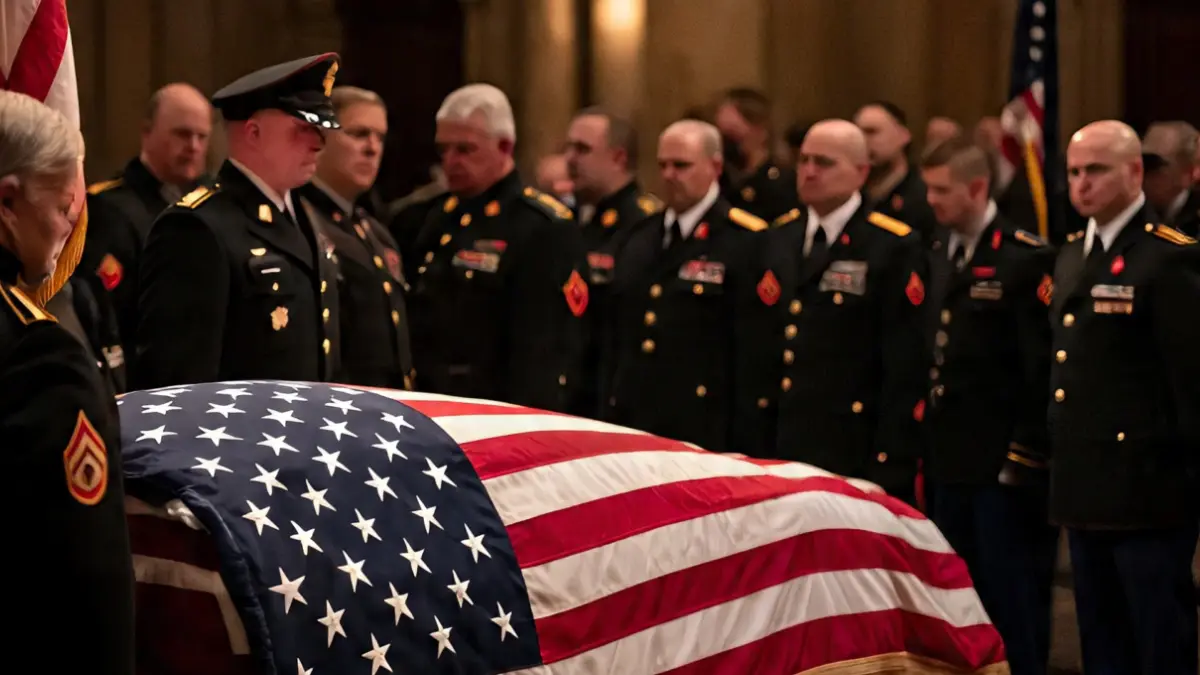
President Trump’s administration suspends asylum processing and Afghan visas following the fatal shooting of a West Virginia Guardsman in Washington, D.C.
Washington, D.C. – On November 29, 2025, the Trump administration announced a pause on all asylum applications and a halt to visas for Afghan nationals, directly linking the move to the death of National Guard member Sarah Beckstrom in a shooting near the White House. The 20-year-old from Summersville, West Virginia, succumbed to her injuries on November 27, while fellow Guardsman Andrew Wolfe remains in critical condition. Officials confirmed the policy shift during a White House briefing, affecting thousands of pending cases.
What Happened?
The shooting occurred on November 26 near the Farragut West metro station, where Beckstrom and Wolfe were on duty. According to authorities, suspect Rahmanullah Lakanwal, 29, approached the pair and opened fire, striking both in the head. Early reports indicate Lakanwal, an Afghan refugee granted asylum in April 2025, wounded one Guardsman in the exchange before being apprehended. The scene, as described by D.C. police, involved immediate medical response and a brief lockdown.
The policy announcement followed Beckstrom’s death, with USCIS halting asylum decisions and the State Department freezing Afghan visa issuances for enhanced vetting.
Official Statements / Reactions
White House Press Secretary Karine Jean-Pierre stated, “Public safety requires these measures, as confirmed by security assessments.” Trump posted on Truth Social, “No more risks – asylum paused, Afghan visas stopped until threats are gone.” Afghan advocacy groups decried the blanket approach, with IRC president David Miliband saying, “This abandons loyal allies.” West Virginia Governor Patrick Morrisey called it “necessary vigilance,” while Sen. Tim Kaine (D-VA) urged targeted reforms over broad bans.
Bipartisan lawmakers requested briefings.
Why This Matters
The changes impact over 200,000 Afghan refugees and asylum seekers, per Migration Policy Institute data, potentially stranding allies abroad amid Taliban threats. Economically, it eases resettlement costs but risks humanitarian crises, with U.S. aid groups warning of increased deportations from host nations like Pakistan. For military families, it underscores service risks; politically, it energizes debates ahead of 2026 elections, where immigration polls at 62% priority.
It tests America’s promise to wartime partners.
Background / Context
Beckstrom and Wolfe were part of Trump’s August 2025 Guard deployment to D.C. for urban security, drawing 5,000 troops nationwide. Lakanwal entered via 2021’s Operation Allies Welcome, serving in Afghanistan’s elite Zero Unit before asylum. Prior pauses under Trump included 2017 travel bans, partially upheld by courts. Asylum backlog hit 2.2 million in 2025, per Syracuse University; Afghan cases surged post-withdrawal, with 76,000 resettled.
Current Situation / What’s Next
As of November 30, USCIS notifications inform applicants of suspensions, with no resumption timeline. Afghan visa appointments at consulates like Islamabad canceled, affecting 8,000+. Wolfe’s condition stable but critical, per family. Legal challenges filed by ACLU.
Congress debates extensions December 5; UN refugee agency monitors fallout.
Conclusion
The pauses reflect swift response to tragedy, balancing security and humanity. As Jean-Pierre noted, “Vetting saves lives.” Forward paths demand precision to honor all sacrifices.
 Avery Khan
 Alex Rivera Alex Rivera