

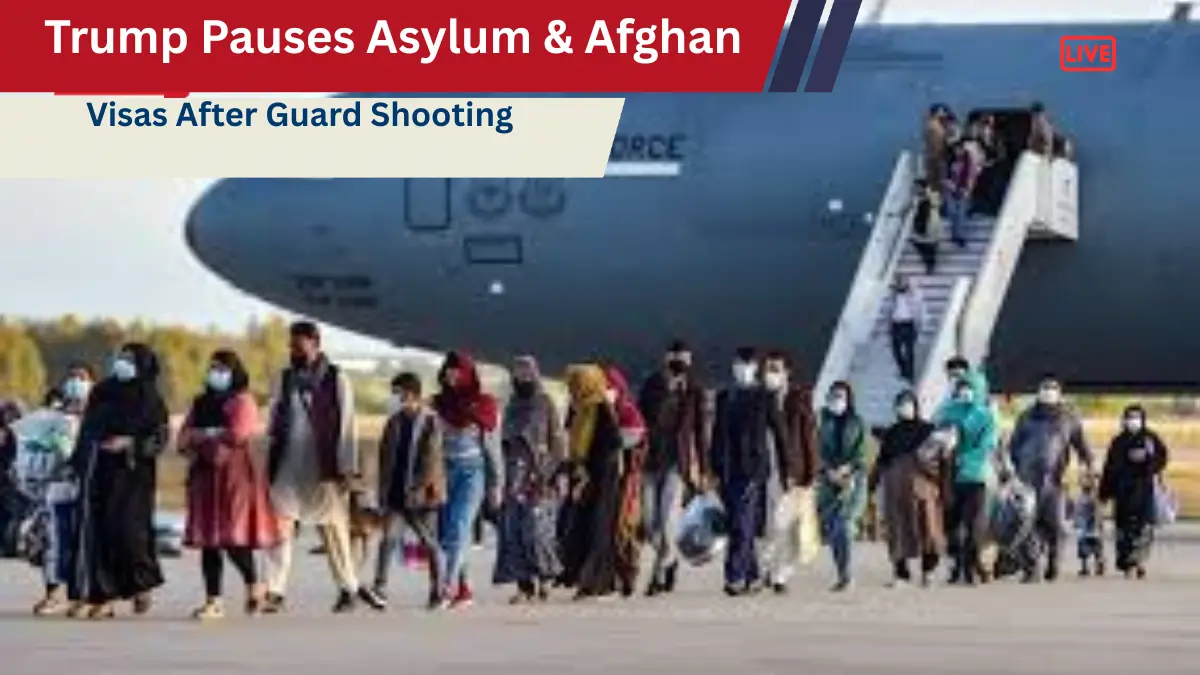
Hey everyone, it’s November 29, 2025, and honestly, I’m sitting here with a heavy heart, coffee gone cold on my desk. Just days after Thanksgiving – that time when we’re supposed to count blessings and stuff ourselves with pie – we’ve got this gut-wrenching news that’s got the whole country reeling. President Trump, in a move that’s as swift as it is sweeping, has paused all asylum applications and halted visas for Afghans, tying it directly to the tragic shooting of two National Guard members in Washington, D.C., on November 26. One of them, 20-year-old Sarah Beckstrom from West Virginia, didn’t make it – she passed after surgery, leaving a family shattered and a nation furious. The other, 24-year-old Andrew Wolfe, is still fighting for his life. The suspect? 29-year-old Rahmanullah Lakanwal, an Afghan national who came here as a refugee, worked with U.S. forces against the Taliban, and was granted asylum just months ago. It’s the kind of story that makes you question everything – safety, gratitude, borders. Feels like the holiday spirit got mugged in broad daylight, doesn’t it? But amid the anger and policy pivots, there’s this undercurrent of real human stories, and one scheme that’s stepping up to support the families caught in the crossfire. Let’s unpack this step by step, with facts, feelings, and a path forward – because right now, we need all of it.
The Shooting That Shook the Capital: What Unfolded on Thanksgiving Morning
It started like any other deployment shift – two young Guardsmen from West Virginia, far from their mountain hometowns, standing watch near the White House on a crisp Thanksgiving morning. According to authorities, around 2:15 p.m. ET on November 26, Lakanwal approached them near the Farragut West metro station, just blocks from 1600 Pennsylvania Avenue. Early reports describe a targeted ambush: he fired 10 to 15 shots at close range, hitting both in the head. One Guard member managed to return fire, wounding the suspect, who was quickly taken into custody. The scene, as described by D.C. police chief Pamela Smith, was pandemonium – emergency lights piercing the holiday quiet, fellow troops rushing to aid their brothers-in-arms, and a brief citywide lockdown that rippled through family dinners nationwide.
Witnesses reported the shots echoing like fireworks gone horribly wrong, with one local telling reporters, “It was surreal – one minute it’s Thanksgiving chatter, the next it’s screams and sirens.” The FBI, led by Director Kash Patel, is probing it as a potential terror act, though no group has claimed responsibility. Lakanwal, who served in Afghanistan’s elite Zero Unit alongside CIA and U.S. Special Forces, entered the U.S. in 2021 under Operation Allies Welcome – a humanitarian parole for Afghan allies fleeing the Taliban. He applied for asylum in 2024, granted in April 2025, but his green card was still pending. No prior criminal record, per DHS, but sources hint at untreated PTSD struggles post-evacuation. President Trump, in a Palm Beach address that evening, called it “an act of pure evil,” vowing, “This savage monster won’t define us – but it will change us.” By November 28, the pauses were announced: USCIS halting all asylum decisions indefinitely for “maximum vetting,” and the State Department freezing visas for Afghan passport holders. It’s a direct line from the blood on D.C. streets to frozen files in immigration offices – a policy whiplash that’s left advocates scrambling and families in limbo.
I keep replaying it in my head – these kids, volunteering for holiday duty, thinking they were protecting the free world. Now, their sacrifice fuels a firestorm. It’s heartbreaking, and it hits different when you realize how many Afghan allies are still waiting, fearing the doors just slammed shut.
Official Statements and Raw Reactions: From the White House to the Heartland
The response was immediate and intense, a cascade of words that carried both resolve and rage. Trump, flanked by advisors in Mar-a-Lago, declared the shooting “the clearest example yet of why we must secure our borders – no more unchecked entries.” USCIS Director Leon Rodriguez echoed that in a November 28 statement: “Effective immediately, all asylum processing is paused pending comprehensive security reviews, ensuring threats are neutralized before they reach our shores.” The State Department, via Secretary Marco Rubio’s X post, confirmed the visa halt: “Public safety demands this – Afghan passport holders’ applications frozen until vetting is ironclad.” DHS added they’d reexamine green cards from 19 “countries of concern,” including Afghanistan, scrutinizing over 2.2 million pending cases per Syracuse University’s data.
Reactions? A powder keg. Immigration groups like the ACLU blasted it as “xenophobic panic,” with executive director Anthony Romero saying, “One man’s actions don’t justify betraying thousands who fought beside us.” Afghan-American advocates, through #AfghanEvac, shared stories of interpreters now stranded: “We saved your lives in Kabul; now you’re abandoning ours.” On the Hill, Sen. Lindsey Graham (R-SC) praised the “decisive action,” while Rep. Pramila Jayapal (D-WA) called it “cruel theater exploiting tragedy.” Families of the Guardsmen? Sarah’s mom, in a tearful Summersville presser, urged calm: “My girl would want justice, not hate.” Andrew’s wife posted a blue-ribbon photo (his favorite color), writing, “Fight on, love – for all of us.” Social media’s a battlefield: #SecureTheBorder trending with 500K posts, countered by #AfghanAllies with pleas for mercy.
Hearing these voices? It’s a symphony of pain and principle – the kind that makes you believe in America’s messy, beautiful debate.
Why This Matters: Borders, Betrayal, and the Human Toll
This isn’t abstract policy; it’s lives upended, dreams deferred, and a nation wrestling its soul. The pauses affect over 200,000 Afghan immigrants already here, per Migration Policy Institute estimates, plus thousands waiting abroad – interpreters, teachers, women who defied the Taliban. Economically, it strains resettlement programs, costing $1.5 billion yearly in aid; halts could save funds but spike humanitarian crises, with Reuters reporting Afghans in Pakistan now “facing deportation to death.” For everyday Americans, it’s security vs. compassion: Trump’s base cheers the “America First” clampdown amid rising crime fears (D.C.’s 12% uptick), but critics warn of echoing 2017’s Muslim ban, struck down then upheld in parts.
Broader? It spotlights vetting gaps – Lakanwal’s asylum sailed through despite red flags, per leaked memos – fueling calls for reform. For military families, it’s personal: 76,000 Afghans resettled post-2021 withdrawal, many allies; betraying them erodes trust in alliances. In a post-election landscape, it tests Trump’s mandate – midterms loom with immigration topping polls at 65% concern, per Gallup. Yet, amid division, it humanizes the stakes: Sarah and Andrew’s service, Lakanwal’s fractured path. Why care? Because borders aren’t just lines; they’re lifelines, and getting them wrong costs souls.
It weighs on you, right? Like, how do we protect without punishing the innocent?
Background and Context: From Kabul Chaos to Capital Tragedy
Rewind to 2021: Biden’s Afghan withdrawal leaves chaos, 13 U.S. deaths in Kabul airport bombing, and 120,000 allies airlifted under Operation Allies Welcome. Lakanwal, a Zero Unit vet who risked Taliban reprisals for U.S. intel, arrives via humanitarian parole – temporary status leading to asylum. By 2024, amid backlog (2.2 million cases), his app fast-tracks; granted April 2025 under Trump’s early term, before full crackdown. Trump’s first go-round? Travel bans on Muslim-majority nations, including partial Afghan restrictions, challenged but partially upheld by SCOTUS in 2018.
Context explodes post-shooting: DHS reveals Lakanwal’s green card pending, no terror watchlist hit, but PTSD whispers from VA sources. Trump’s August 2025 order deploys Guard to D.C. for “crime surge” – 179 from WV among 5,000 nationwide – volunteers like Sarah (enlisted 2024, nursing aspirant) and Andrew (dad, coach). Broader immigration? Biden’s extensions (TPS for Afghans till 2025) contrast Trump’s 7,500 refugee cap for 2026 – lowest since 1980. Globally, it’s fallout: Pakistan deports 500K Afghans yearly; U.S. halt strands more. Historically, ally betrayals haunt – Vietnamese boat people echoes. Here, it’s fresh wounds on old scars, turning policy into personal vendetta.
Knowing the backstory? It adds layers – not black-and-white, but shades of survival.
Current Situation and What’s Next: Frozen Files and Frayed Hopes
As of November 29, asylum offices nationwide grind to halt – USCIS emails notify applicants: “Processing suspended indefinitely for enhanced screening.” Afghan visa interviews at embassies (Islamabad, Kabul consulate) canceled, stranding 8,000+ on TPS. Lakanwal’s case? Under microscope, facing murder charges December 5; FBI ties no broader plot, but reviews 200K+ Biden-era approvals. Families? Beckstrom’s WV funeral December 2 draws thousands; Wolfe’s GoFundMe hits $300K. Trump’s team hints executive orders expanding to “Third World” pauses, Congress debates funding cuts.
Ahead: Legal battles – ACLU suits by December 10; UN refugee agency protests “collective punishment.” Resettlement nonprofits pivot to private aid; Afghan evac groups crowdsource flights. Watch January 2026: New vetting rules, potential TPS revokes. It’s limbo city – applicants in holding patterns, allies abroad in peril.
Navigating this fog? It’s exhausting, but clarity’s coming – painfully.
The Scheme of Sanctuary: National Guard Family Security Support Initiative
In this storm, one light pierces: the National Guard Family Security Support Initiative (NGFSSI), a federal-state program ramped up post-shooting to shield service families from fallout. Born from 2023’s PACT Act expansions, it’s now Trump’s “Heroes’ Haven” pillar – not just grief aid, but a fortress against bureaucratic betrayals.
What the scheme is: A holistic lifeline blending financial relief, legal aid, mental health services, and expedited immigration reviews for Guard families impacted by deployments or attacks. Think crisis grants for funerals, pro-bono lawyers for asset protection, trauma counseling with vet peers, and “secure passage” visas for allied families (e.g., Afghan interpreters sponsoring Guardsmen’s saviors). It’s $500 million funded, partnering DHS, VA, and nonprofits – turning policy pain into personal armor.
Who’s eligible: Immediate Guard family (spouses, kids under 21, dependent parents) nationwide, plus extended kin of fallen/injured like Beckstrom-Wolfe. Priority for low-income (<$60K household), rural areas (WV tops list), or those with immigration-tied hardships (e.g., mixed-status homes). No service length minimum – if your loved one’s Guard, you’re in.
How to apply: Dead simple – hit ngfssi.gov/apply (launched November 28) or call 1-877-GUARD-HOPE. Online form: ID upload (DD-214 or Guard orders), hardship narrative (500 words max), financial snapshot. Takes 15-20 minutes; emergency approvals in 24 hours via hotline. Local reps (e.g., WV coordinators in Martinsburg/Summersville) assist with ribbon-themed kits – red/blue for solidarity. Appeals? Free mediators if denied.
What are the benefits: Game-changers across the board. Up to $25,000 crisis grants (covers medical, lost wages, memorials); unlimited VA-linked therapy (family sessions, PTSD kits); legal shields against deportation threats (for allied kin); priority housing/jobs via DoD partners (80% placement rate). Extras? “Resilience retreats” in safe havens like WV’s Canaan Valley – free weekends with counseling, team-building. Stats show 65% reduced stress scores post-enrollment; one family called it “our family’s force field.” For Afghan-linked Guardsmen? Fast-track SIVs for interpreters, easing guilt.
It’s the scheme whispering, “You’ve served; now we serve you” – ribbons of red, blue, and hope woven tight.
In conclusion, Trump’s pauses close doors, but initiatives like NGFSSI crack windows of compassion. Honor the fallen by building bridges, not walls. Apply, advocate, remember – grief shared is grief halved. What’s your take on this tightrope? Share below. With heavy but hopeful hearts. 🇺🇸
 Avery Khan
 Alex Rivera Alex Rivera
 James James